

The Cockapoochon is a designer dog that combines three breeds: the Cocker Spaniel, Poodle, and Bichon Frise. Often described as a friendly, curly-coated companion, this mix may appeal to people looking for a small dog with an affectionate personality and an active, playful nature.
There is an important detail to understand before bringing one home: Cockapoochons are not a standardized breed with a single, predictable appearance or temperament. Their size, coat, energy level, and grooming requirements can vary depending on their parents and breeding history.

Cockapoochon Quick Breed Overview
| Type | Designer dog; Cocker Spaniel, Poodle, and Bichon Frise mix |
| Adult size | Variable; often described as small to medium-sized |
| Adult weight | Depends on the size and genetics of the parent dogs |
| Life expectancy | Varies with inherited traits, health, and overall care |
| Coat | May be wavy, curly, or softer and straighter |
| Coat colors | May include white, cream, apricot, brown, black, or combinations |
| Temperament | May be affectionate, playful, intelligent, and sociable |
| Grooming | Regular brushing and professional grooming may be necessary |
| Exercise | Daily walks, play, and mental stimulation |
| Shedding | Variable; the coat cannot be predicted from the mix's name alone |
What Is a Cockapoochon?
A Cockapoochon is a three-way cross involving the Poodle, Cocker Spaniel, and Bichon Frise. All three parent breeds have qualities that can make them appealing companion dogs, but the combination does not guarantee that every puppy will inherit the same characteristics.
The name is sometimes used for dogs bred through different crossing arrangements. A puppy's actual ancestry therefore matters more than the label alone. If you are considering buying one, ask the breeder which dogs were used in the pairing, whether the parents have documented health screening, and what is known about the puppy's family history.
Unlike an established breed with a consistent breed standard, the Cockapoochon does not have one universally accepted size, appearance, or temperament. Claims about its exact origin and the decade in which it first appeared should be treated cautiously unless supported by reliable breeding records.
Appearance, Size, and Coat
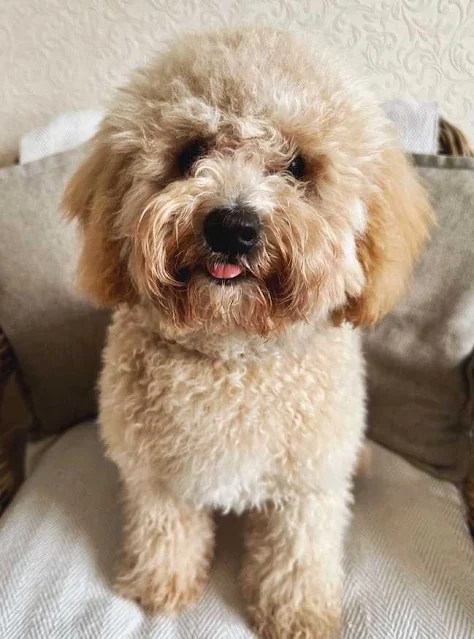
Cockapoochons may have a rounded face, expressive eyes, floppy ears, and a soft coat. Some resemble small Poodles, while others inherit more of the Cocker Spaniel's facial features or the Bichon Frise's fluffy appearance.
Their coats may be curly, wavy, or relatively straight. White, cream, apricot, brown, and black are possible colors, as are combinations of these shades. However, appearance depends on the individual dog's inherited traits rather than a fixed Cockapoochon standard.
Adult size also varies. The size of the Poodle parent is particularly relevant, but the Cocker Spaniel and Bichon Frise ancestry can influence the final result as well. If adult size matters to your household, ask about the parents' actual weights and heights rather than relying on a general estimate for the mix.
Cockapoochon Temperament and Personality
A Cockapoochon may inherit the sociable nature of the Cocker Spaniel, the intelligence and trainability associated with Poodles, and the companionable character of the Bichon Frise. These are possibilities, not guarantees: individual dogs can differ considerably, even within the same litter.
Many prospective owners are attracted to this mix because they want a dog that enjoys being around people. A well-socialized Cockapoochon may enjoy family activities, interactive play, and relaxing with its owners after a walk.
However, a friendly temperament does not automatically make every dog suitable for every household. Early socialization, positive training, appropriate handling, and the dog's individual personality all influence how it behaves around children, visitors, and other animals.
Are Cockapoochons good family dogs?
They can be a good match for families that have time for companionship, training, exercise, and grooming. Children should learn how to approach and handle a dog gently, and younger children should always be supervised around pets.
When choosing a puppy, look for a dog that is comfortable with appropriate human interaction and ask how it has been socialized. If you are adopting an adult, find out as much as possible about its behavior around children and other pets.
Can a Cockapoochon be left alone?
Do not assume that a Cockapoochon will happily spend long periods alone simply because it is small. A dog that becomes accustomed to constant company may struggle when left on its own.
Build up alone time gradually, provide suitable enrichment, and make sure the dog has had opportunities to exercise and relieve itself. If it repeatedly barks, destroys objects, or becomes distressed when you leave, discuss the behavior with a veterinarian or qualified dog behavior professional.
Exercise and Mental Stimulation
Cockapoochons need regular activity, but their ideal exercise routine depends on their age, size, fitness, and individual energy level. Daily walks and play are sensible starting points. Some dogs will also enjoy scent games, retrieving toys, or short training sessions.
Rather than assuming that every Cockapoochon needs exactly 60 minutes of exercise a day, observe how your dog responds to activity and adjust the routine accordingly. Puppies need age-appropriate activity, while older dogs or dogs with health conditions may need a different approach.
Walking provides more than physical exercise. Allowing a dog to sniff and explore safely can offer useful mental stimulation, too. These practical dog-walking tips can help you establish a more enjoyable routine.
Indoor activities are useful on rainy days or when outdoor exercise is limited. Try short obedience exercises, food puzzles, hide-and-seek with toys, or other suitable activities. You can also explore these indoor games for small dogs for ideas.
Keep activities appropriate for your dog's fitness and avoid pushing it to continue when it is tired, uncomfortable, or struggling in hot weather.
Grooming a Cockapoochon
Grooming is one of the main responsibilities to consider before choosing this mix. A curly or wavy coat can trap loose hair and form tangles, particularly when the hair grows long. A straighter coat may have different needs, so the routine should match the dog's actual coat.
How often should you brush a Cockapoochon?
Many Cockapoochons benefit from brushing several times a week, and some coats need daily attention. A quick surface brush is not always enough: tangles can form close to the skin, where they are harder to spot.
Pay particular attention to:
- Behind the ears, where friction can create tight tangles.
- Under the front legs and around the armpits.
- The chest, belly, and areas where a harness or collar rubs.
- The legs, tail, and other areas with longer hair.
Work gently and avoid pulling on knots. If the coat is tightly matted, seek help from a professional groomer rather than cutting close to the skin yourself. Matted hair can pull painfully and conceal irritated skin.
Professional grooming and bathing
Professional grooming may be needed every several weeks, depending on the coat's growth, length, and condition. A groomer can recommend an appropriate schedule and haircut for your particular dog.
Bathe your Cockapoochon when necessary using a dog-appropriate shampoo, and rinse thoroughly. Excessive bathing or unsuitable products may irritate the skin.
Ears, nails, and teeth
Floppy ears can retain moisture and may need regular checks. Look for redness, an unpleasant smell, discharge, or persistent head shaking. These signs warrant veterinary advice rather than repeated cleaning at home.
Trim the nails when they become too long, taking care not to cut into the sensitive inner portion. Regular toothbrushing with dog-specific toothpaste is also important. See our guide to brushing a dog's teeth for more information.
Are Cockapoochons Hypoallergenic?
No dog, including a Cockapoochon, can be guaranteed to be hypoallergenic. Some individuals may shed less than others, but coat type and shedding can vary in a mixed-breed dog.
Dog allergies are associated with proteins found in substances such as dander and saliva, not simply the amount of hair a dog sheds. A low-shedding coat therefore does not guarantee that an allergic person will tolerate the dog.
If someone in your household has a dog allergy, speak with an allergy specialist before bringing a dog home. Spending time around a particular dog may provide some information about your reaction, but a brief visit cannot guarantee that long-term exposure will be comfortable.
Cockapoochon Health and Lifespan
A Cockapoochon's health depends on its inherited traits, breeding history, environment, and ongoing care. There is no single lifespan or health profile that applies to every dog in this mix.
Because the mix involves three parent breeds, it is worth discussing health concerns associated with each parent's family history. Potential issues to ask a veterinarian or responsible breeder about include:
- Eye conditions: Ask whether the parents have had appropriate eye examinations and breed-relevant screening.
- Hip and joint problems: Ask about the parents' orthopedic health and any recommended screening.
- Ear problems: Dogs with floppy ears may need careful monitoring for irritation or infection.
- Dental disease: Smaller dogs can be prone to dental problems, making regular tooth care important.
- Heart conditions and other inherited disorders: Ask which health tests are appropriate for the specific parent breeds and family lines.
This list does not mean that every Cockapoochon will develop these conditions. It identifies topics worth discussing when reviewing the health history of a puppy and its parents.
Arrange regular veterinary check-ups, keep vaccinations and parasite prevention up to date according to your veterinarian's advice, and feed an appropriate, balanced diet. Seek veterinary care if you notice persistent changes in appetite, activity, vision, mobility, or behavior.
What Should a Cockapoochon Eat?
Choose a complete and balanced dog food appropriate for your Cockapoochon's life stage, size, and health. Puppies, adults, and senior dogs may have different nutritional needs.
Portion sizes should reflect the dog's weight, activity, body condition, and the feeding guidance for its food. Avoid assuming that every dog of this mix needs the same amount, since their adult sizes can differ.
Fresh drinking water should always be available. If your dog develops persistent digestive problems, unexplained weight changes, or suspected food sensitivities, consult your veterinarian before making major dietary changes.
Is a Cockapoochon Suitable for Apartment Living?
A Cockapoochon may adapt well to an apartment if its exercise, training, companionship, and toileting needs are met. Access to a large garden is not the only factor that determines whether a dog will be comfortable in a home.
Consider your daily schedule before choosing one. You should be able to provide regular walks, opportunities to play, grooming, and time together. It is also worth considering whether barking could create difficulties in a building with close neighbors.
First-time dog owners may find this mix manageable if they are prepared to learn about training and coat care. However, a dog that needs frequent grooming or struggles with being alone may require more time and planning than expected.
How Much Does a Cockapoochon Cost?
The price of a Cockapoochon can vary considerably by country, breeder, availability, parentage, and the health care provided before the puppy goes home. A single price range would not reliably represent every market.
When comparing breeders, look beyond the advertised purchase price. Ask for information about the puppy's parents, health screening, veterinary records, early socialization, and the support available after purchase.
Be cautious of sellers who guarantee that a puppy will be hypoallergenic, promise a particular adult size without reliable evidence, or refuse to provide relevant health information. A high price alone is not proof of responsible breeding.
Remember to budget for food, vaccinations, routine veterinary care, grooming, training, equipment, and unexpected medical expenses throughout the dog's life.
How to Choose a Healthy Cockapoochon Puppy
If you decide that this mix suits your household, take time to evaluate the breeder and the individual puppy rather than choosing on appearance alone.
- Ask which breeds and individual dogs make up the puppy's ancestry.
- Request relevant health screening records for the parent dogs.
- Ask how the puppies are being raised and introduced to ordinary household experiences.
- Look for a puppy that appears alert and comfortable, with no obvious signs of illness.
- Ask about veterinary examinations, vaccination records, parasite treatment, and the puppy's current diet.
- Find out what support the breeder provides if health or behavior questions arise later.
A responsible breeder should welcome reasonable questions and allow you to make an informed decision. If you are adopting an adult Cockapoochon, ask about its known health history, temperament, grooming routine, and behavior when left alone.
Is the Cockapoochon the Right Dog for You?
The Cockapoochon may be a rewarding companion for someone who wants an affectionate dog and has time for regular interaction, training, exercise, and coat care. Its combination of three popular companion breeds can produce an appealing family pet, but the results are not completely predictable.
Think carefully about grooming costs, the possibility of barking or separation-related distress, and the fact that a low-shedding coat is not a guarantee against allergies. If you need a dog of a particular size or temperament, assess the individual dog's characteristics and family history rather than relying on the mix's name.
The best match is not necessarily the cutest puppy. It is the dog whose needs, personality, and likely care requirements fit your household over the long term.
Frequently Asked Questions About Cockapoochons
Are Cockapoochons hypoallergenic?
No dog can be guaranteed to be hypoallergenic. Some Cockapoochons may shed less than others, but their coat and allergen levels can vary. People with dog allergies should seek medical advice before bringing one home.
How big does a Cockapoochon get?
Adult size varies according to the size and genetics of the parent dogs. Ask about the parents' actual measurements and family history rather than relying on a fixed weight or height estimate.
How much exercise does a Cockapoochon need?
Most need regular walks, play, and mental stimulation, but the right amount depends on age, health, fitness, and individual energy level. Adjust the routine to your dog's needs.
Do Cockapoochons need frequent grooming?
They may need frequent brushing, especially if the coat is curly or prone to tangling. Some also need professional grooming every several weeks. The ideal schedule depends on coat length and condition.
Are Cockapoochons good with children?
Some can be affectionate family companions, but temperament and tolerance vary between individual dogs. Children should be taught to handle dogs gently, and interactions with young children should always be supervised.
Can Cockapoochons live in apartments?
Yes, many can adapt to apartment living if they receive appropriate exercise, training, companionship, and opportunities to relieve themselves. Consider barking and the time the dog will spend alone, too.
How much does a Cockapoochon cost?
Prices vary by location, breeder, parentage, and the care provided. Compare health records, breeding practices, and ongoing ownership costs instead of relying on a single advertised price range.
Related reading:
