

Last updated: March 2026
The Alaskan Malamute and the Siberian Husky look strikingly similar at first glance — both are Arctic sled dogs with thick double coats, erect ears, and wolf-like faces. But they are two distinct breeds with different origins, different physical builds, and meaningfully different temperaments. This guide covers every key difference to help you tell them apart — and decide which one suits your lifestyle.
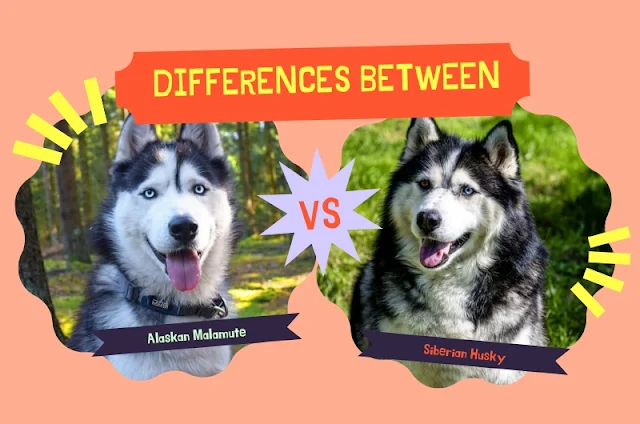
Quick Comparison: Malamute vs Husky at a Glance
| |
Alaskan Malamute | Siberian Husky |
|---|---|---|
| Origin | Alaska (Mahlemut tribe) | Siberia (Chukchi people) |
| Height | 23–25 inches | 20–24 inches |
| Weight | 75–85 lbs (34–39 kg) | 35–60 lbs (16–27 kg) |
| Eye color | Brown only | Brown, blue, or heterochromia |
| Tail | Curls over the back (plume) | Hangs down like a brush |
| Bred for | Heavy loads, short distances | Light loads, long distances |
| Energy level | High | Very high |
| Trainability | Moderate — independent | Moderate — also independent |
| With strangers | Friendly and open | Friendly but can be reserved |
| With other dogs | Can be same-sex dominant | Generally good with others |
| Lifespan | 10–14 years | 12–15 years |
| AKC group | Working Group | Working Group |
Origins: Where Each Breed Comes From
Alaskan Malamute

The Alaskan Malamute is believed to descend from wolf-dogs brought to Alaska over 4,000 years ago by the Mahlemut people — an Inuit tribe who settled in the Norton Sound region of northwestern Alaska. The breed was central to daily survival: it pulled heavy freight sleds, carried packs, and lived closely alongside its human family.
The Malamute was bred as a weightlifter — built for power and endurance over short distances with heavy loads rather than speed. During the Alaska Gold Rush of 1896, demand for working sled dogs exploded and outside breeds were crossed with native dogs. Thankfully, the Mahlemut tribe's remote location meant their dogs remained relatively purebred, and those animals became the foundation of the modern Alaskan Malamute.
Siberian Husky
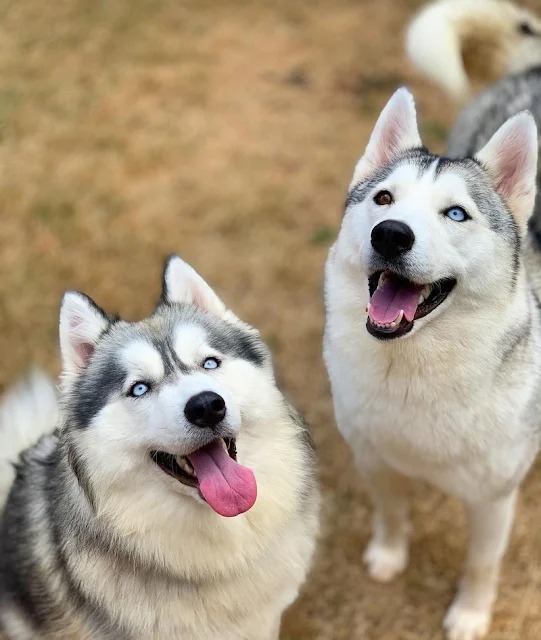
The Siberian Husky was developed by the Chukchi people of northeastern Siberia — one of the oldest and most distinct dog breeds in the world, with a lineage traceable over 9,500 years. Where the Malamute was a weightlifter, the Husky was a marathon runner: bred to cover enormous distances quickly on minimal food, pulling lighter loads with remarkable efficiency.
The Chukchi trusted their Huskies so deeply that the dogs slept inside tents with the family to provide warmth, including with children. This close human bond is still evident in the Husky's personality today. The breed was introduced to North America during the Nome Gold Rush, where it quickly proved its superiority in long-distance sled racing.
For more on Husky mixes, see our guides on the Labrador Husky Mix (Labsky) and the Pitsky (American Pit Bull Terrier × Siberian Husky).
Physical Differences
Size and build
Size is the easiest way to tell the two breeds apart. According to the AKC breed standard, the Alaskan Malamute's desired freighting size is 23–25 inches tall and 75–85 pounds. The Siberian Husky is noticeably smaller and lighter at 20–24 inches tall and 35–60 pounds. As the AKC puts it, the Siberian is the marathon runner — light and nimble — while the Malamute is the weightlifter — big and strong.
The Malamute has a broader chest, heavier bone, and shorter legs relative to its body. The Husky has a narrower chest, longer legs, and a more fluid, athletic movement. Side by side, the size difference is immediately obvious.
Eyes
Eye color is one of the clearest distinguishing features. Alaskan Malamutes always have brown eyes — blue eyes are a disqualification under the AKC breed standard and indicate impure breeding. Siberian Huskies, by contrast, can have brown eyes, blue eyes, or heterochromia (one of each) — all are accepted and common in the breed.
Tail
The tail shape is another reliable identifier. The Malamute carries its tail curled up and over the back like a waving plume. The Husky's tail hangs down in a brush shape when relaxed, curving upward in a sickle shape only when excited or alert.
Coat and markings
Both breeds have thick double coats that shed heavily twice a year. The Malamute's coat is generally coarser and longer than the Husky's, with a wooly, oily undercoat up to two inches thick. Color ranges are similar — black, gray, red, sable, and white — but Huskies show more variation, including all-white, agouti, and striking red-and-white coats. Many Huskies have a distinctive white stripe running up the center of the forehead; Malamutes tend to have a solid cap of color (often black) tapering toward the muzzle.
Head and ears
The Malamute has a broader, more massive head with a pronounced forehead. Its ears sit slightly offset to the sides of the skull. The Husky has a narrower, more balanced head with ears positioned directly atop the skull, giving it a sharper, more pointed appearance.
Temperament Differences
Both breeds are active, intelligent, and friendly — neither makes a good guard dog. But their personalities differ in important ways.
The Alaskan Malamute is deeply affectionate and family-oriented, but it is not a one-person dog. Malamutes tend to be equally warm with everyone, including strangers. They are confident and dignified rather than hyperactive, and are generally described as calmer indoors than Huskies — though "calm" is relative for a breed that needs several hours of exercise daily. One notable trait: Malamutes can be dominant with same-sex dogs and should be carefully introduced to other dogs in the household. They have a strong prey drive and are not reliably safe with small animals.
The Siberian Husky is outgoing, playful, and very vocal — known for howling, "talking," and a seemingly endless supply of energy. Huskies are generally good with other dogs and tend to be slightly more reserved with strangers compared to Malamutes, though they are not suspicious or guarding by nature. Their independence and escape-artist tendencies (digging under fences, jumping over them, slipping through gaps) make secure containment essential. A Husky left without adequate exercise or mental stimulation will find its own entertainment — reliably destructive.
As for intelligence: both breeds are highly intelligent working dogs. The difference lies in how they use that intelligence. Huskies tend to be more food-motivated and slightly more willing to engage with training games. Malamutes can be more independent-minded and stubborn, but also more focused on their handler once that bond is established. Neither breed is easier than the other to train — both require patience, consistency, and positive reinforcement from an early age.
Exercise and Care
Both breeds require substantial daily exercise — at minimum 1–2 hours of vigorous activity. Neither is suited to sedentary households or apartment living without a serious commitment to outdoor exercise.
- Malamute: Thrives with hiking, weight pulling, backpacking, and long walks. Slightly less frantic than the Husky but still needs a significant daily outlet. Recall is unreliable off-leash.
- Husky: Higher base energy than the Malamute. Excellent running companion. Needs a securely fenced yard — underground electric fences are not sufficient for this breed.
Both breeds blow their undercoat twice a year, requiring daily brushing during shedding seasons. Never shave either breed's double coat — it damages the insulating structure and does not reduce long-term shedding.
Health Differences
Health note: The information below is cross-referenced with the OFA Hip Dysplasia database, OFA Eye Disease registry, and the AKC Siberian Husky vs Alaskan Malamute guide. Always consult a licensed veterinarian for advice specific to your dog.
The two breeds have meaningfully different health risk profiles — worth knowing before choosing one.
Alaskan Malamute health concerns
- Hip and elbow dysplasia: The most common orthopedic concern in Malamutes. OFA screening of parent dogs is essential — always ask breeders for documented evaluations.
- Polyneuropathy (PN): A hereditary nerve disease specific to the Malamute. DNA testing is available and reputable breeders screen for it.
- Hypothyroidism: Common in the breed, manageable with daily medication once diagnosed.
- Bloat (gastric dilatation-volvulus): A life-threatening condition more common in large, deep-chested breeds. Feeding smaller meals and avoiding vigorous exercise after eating reduces risk.
- Day blindness: A hereditary eye condition specific to Malamutes where dogs have severely impaired vision in bright light.
Siberian Husky health concerns
- Hereditary cataracts: Can appear as early as 6–12 months of age and may require surgery. Annual eye exams by a certified veterinary ophthalmologist are recommended.
- Progressive retinal atrophy (PRA): A degenerative condition causing gradual vision loss. In Huskies, it appears to be sex-linked and found mainly in males.
- Corneal dystrophy: A breed-specific eye condition causing cloudiness in the cornea.
- Hip dysplasia: Less common than in Malamutes but still a risk worth screening for.
- Hypothyroidism: Seen in both breeds.
Overall, Huskies tend to have fewer serious health concerns than Malamutes, and their longer average lifespan (12–15 years vs 10–14 years for the Malamute) reflects this.
Which Breed Is Right for You?
- Choose a Malamute if: You want a larger, more powerful dog with a slightly calmer indoor temperament; you don't have other same-sex dogs; you enjoy hiking and weight sports; and you want a dog that bonds warmly with the whole family including strangers.
- Choose a Husky if: You want a lighter, faster dog and enjoy running; you have other dogs in the household; you want more striking eye color variety; or you prefer a slightly smaller dog. Be prepared for more vocalization and even more escape-artist behavior.
- Neither breed is right if: You want a calm, low-maintenance, or easily trained dog; you live in an apartment with no outdoor space; or you're away from home for long hours without adequate exercise arrangements.
FAQ
What is the main difference between a Malamute and a Husky?
The Alaskan Malamute is larger and heavier (75–85 lbs, 23–25 inches) while the Siberian Husky is smaller and lighter (35–60 lbs, 20–24 inches). The Malamute was bred for power and heavy loads; the Husky for speed and long distances. Malamutes always have brown eyes; Huskies can have blue, brown, or heterochromic eyes.
Are Malamutes stronger than Huskies?
Yes. The Malamute is significantly heavier and more powerfully built, bred specifically for hauling heavy freight. The Husky is bred for speed and endurance over long distances with lighter loads — think weightlifter versus marathon runner.
Can a Malamute have blue eyes?
No. Blue eyes are a disqualification in the AKC breed standard for Alaskan Malamutes and indicate impure breeding. Malamutes always have brown eyes. Blue eyes are common and accepted in Siberian Huskies.
Which is more intelligent — Malamute or Husky?
Both breeds are highly intelligent working dogs. Huskies tend to be slightly more food-motivated and willing to engage with training tasks. Malamutes can be more independent and stubborn. The practical difference in trainability between the two is small — both require patient, consistent positive reinforcement.
Which is bigger — a Malamute or a Husky?
The Malamute is significantly bigger. The AKC standard describes a desired weight of 75–85 lbs for the Malamute compared to 35–60 lbs for the Husky. Height-wise, Malamutes stand 23–25 inches versus 20–24 inches for Huskies.
Which breed sheds more — Malamute or Husky?
Both breeds shed heavily and blow their entire undercoat twice a year. The Malamute's coat is thicker and longer, so the total volume of shed fur tends to be greater. Brushing 3 times per week (daily during blowouts) is essential for both breeds.
Are Malamutes or Huskies better with other dogs?
Huskies are generally better with other dogs, including same-sex dogs. Malamutes can show dominance and same-sex aggression, particularly toward other large dogs. Early socialization helps both breeds, but households with multiple dogs should approach Malamute introductions with extra care.
Which breed lives longer — Malamute or Husky?
Siberian Huskies typically live slightly longer — 12–15 years on average — compared to 10–14 years for Alaskan Malamutes. Huskies also tend to have fewer serious hereditary health conditions.
Disclaimer: This content is for informational purposes only. Consult a licensed veterinarian for advice specific to your dog's health and care needs.
